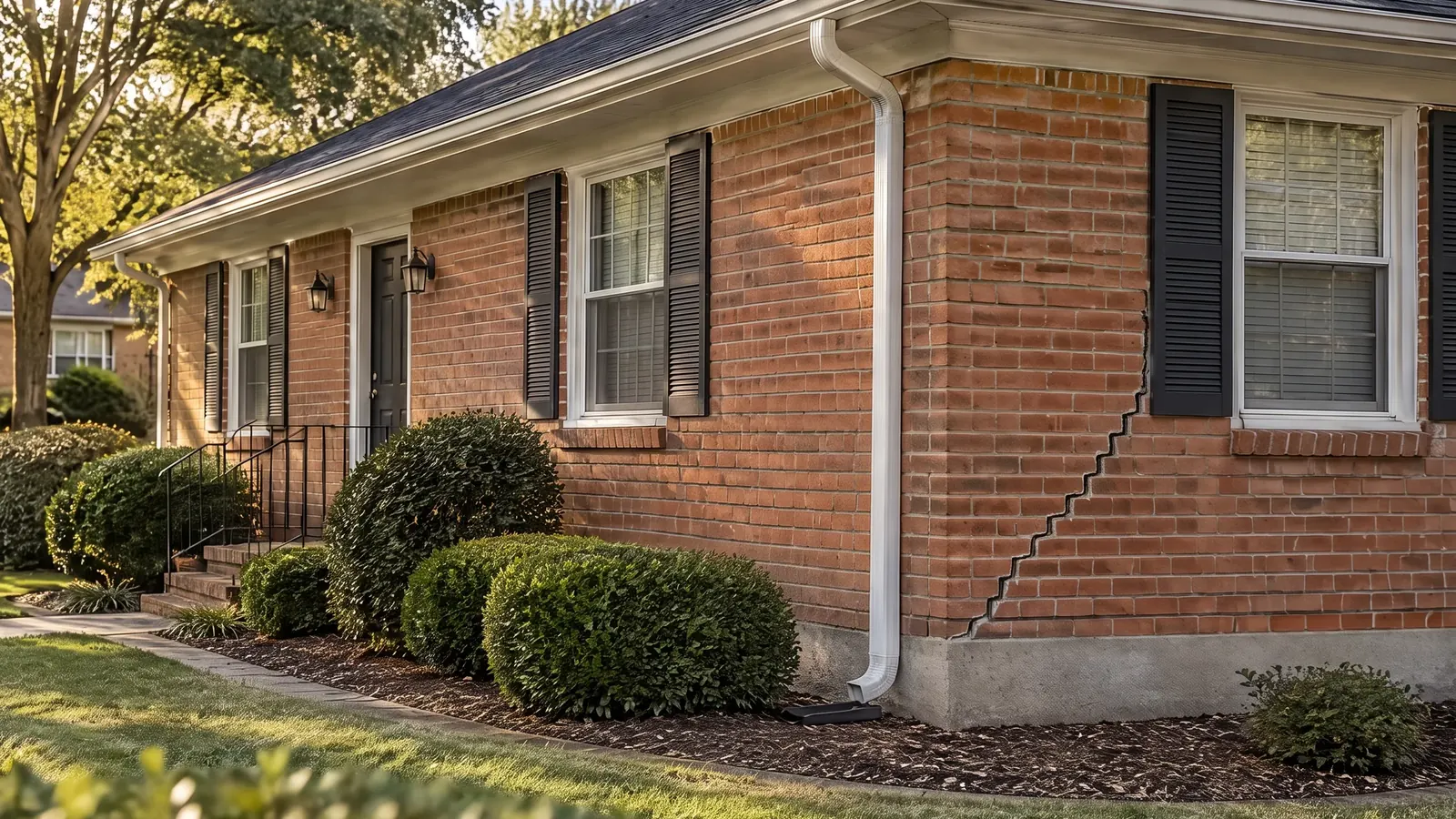
Most foundation problems around Murfreesboro come from clay soil that swells and shrinks over shallow limestone, plus water that collects at the house. Tell us what you are seeing and we will connect you with one licensed local contractor for a free on-site inspection and a written estimate. You decide whether to hire them.
- Cost to youFree referral, no obligation
- LicensingTN license required from $3,000 here
- Who comes outOne independent local contractor
- Our numbersSourced from USGS, USDA and Census
Why do foundations move around Murfreesboro?
The city sits on limestone with a layer of clay soil on top, and in many places the clay is thin. Clay swells when it gets wet and shrinks when it dries. Where rock comes close to the surface, part of a house can rest on rock and part on clay.
- 78 sinkholesThe U.S. Geological Survey tracked flooding in 78 sinkholes in three areas east, north and northwest of Murfreesboro after storms in 2001 and 2002. Source: USGS report 2005-5281
- 20 to 40 inches to rockTalbott soil, first described from a site in Rutherford County, has a firm clay subsoil over limestone at that depth. Source: USDA Talbott series description
- $3,000 license lineRutherford County homes need a licensed home improvement contractor for jobs from $3,000 to $24,999. Source: Tennessee Board for Licensing Contractors
Free inspection
Want a licensed contractor to look at yours?
Tell us what you are seeing. We pass it to one independent, licensed contractor who covers your town, and they call to set up a free visit.
What types of foundation problems show up around Murfreesboro?
Most homeowners notice one of six signs first: a crack that climbs through brick, a door that sticks, a floor that slopes, a block wall that bows, a cracked slab or a sagging crawl space beam. Each row links to the repair that usually goes with it, so you can read what a contractor would check.
- 01 / 06Stair-step cracks in brickBrick and block show movement through the mortar joints.Foundation crack repair
- 02 / 06Doors that stick or gap at the topThe frame has racked because one side of the house moved.Foundation repair
- 03 / 06Floors that slope or bounceCommon on crawl space homes when piers settle or wood softens.House leveling
- 04 / 06A block wall bowing inwardWet clay pushes on basement and retaining walls.Basement wall repair
- 05 / 06Cracks in a slab or garage floorSettling fill, plumbing leaks or soil movement under the slab.Slab foundation repair
- 06 / 06Sagging crawl space beamsRot, failing piers or damp air under the house.Crawl space structural repair
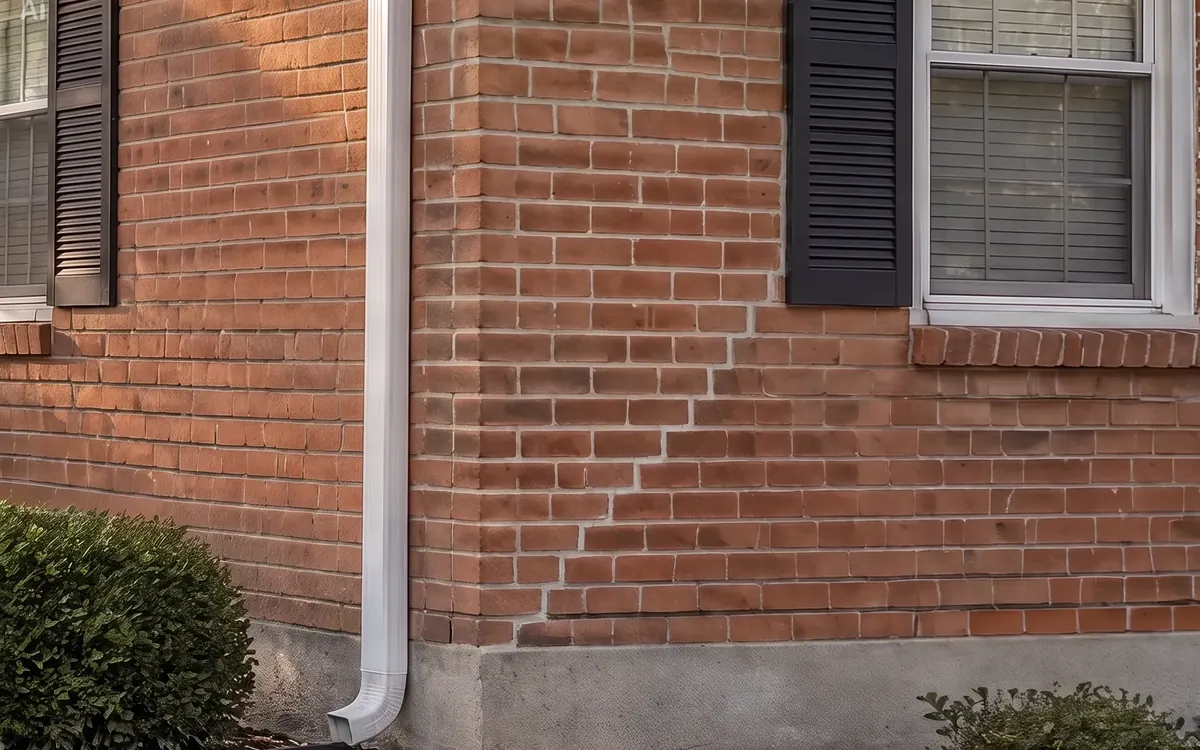
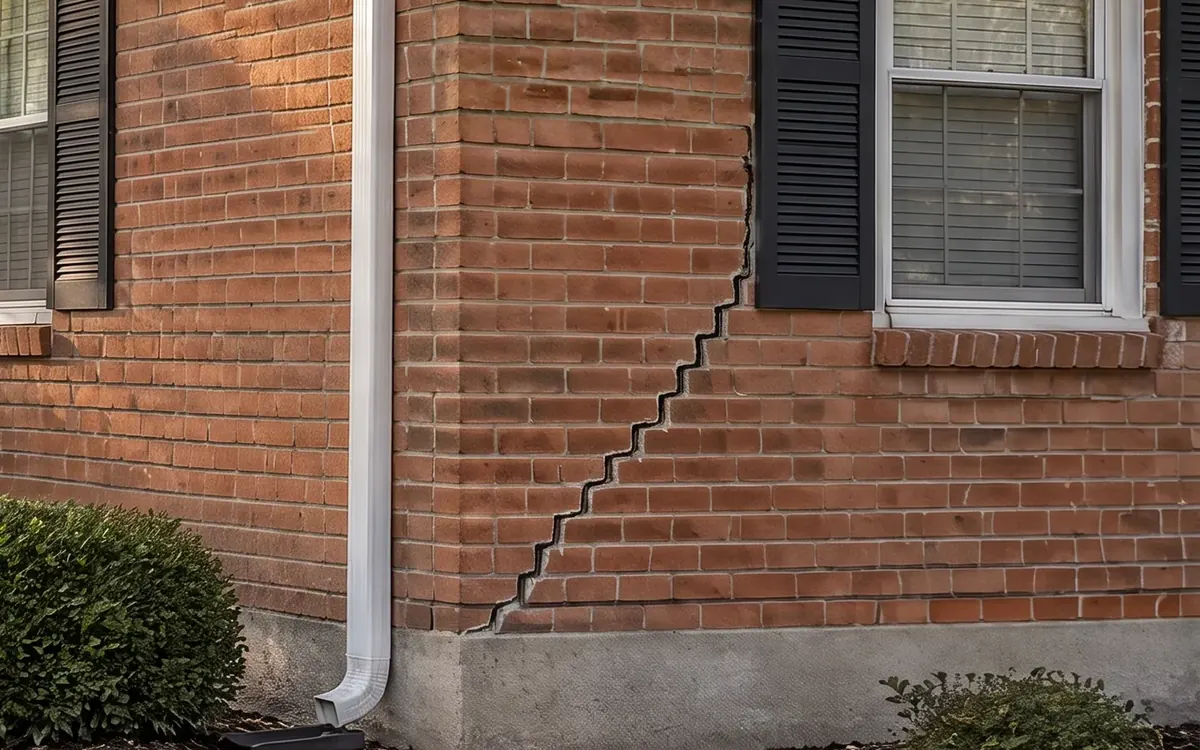
What a finished crack repair looks like
A stair-step crack is a symptom. A good contractor stops the movement first, often with piers or drainage, and then repoints the mortar. Patching the crack alone usually means it comes back.
Foundation repair services around Murfreesboro
Cost ranges are Angi's 2026 national figures. Your quote depends on the house, the soil and how far the problem has gone.
- 01Foundation repairDiagnosis and repair for settling, cracking or shifting foundations.Most pay $2,225 to $8,133
- 02Pier and helical pier repairSteel push piers and helical piers that carry the house on firmer ground.$1,000 to $3,000 per pier
- 03Slab foundation repairFixes for sinking, cracked or heaving concrete slabs.Slab jacking $500 to $1,300
- 04House levelingLeveling sagging floors and out-of-level crawl space homes.Reshimming $1,200 to $4,000
- 05Crawl space structural repairRotted sills, sagging joists, failing piers and damp crawl spaces.New piers $800 to $4,000
- 06Basement wall repairBowing, leaning or cracked basement and block walls.Basement repair $2,300 to $7,600
- 07Foundation crack repairSealing and structural repair for foundation and wall cracks.Cracks $250 to $800
- 08Foundation inspection and estimatesOn-site evaluations, written estimates and engineer reports.Engineer report $300 to $1,000
Free inspection
Not sure what you are looking at?
Tell us what you see. We will find a licensed local contractor to come and look.
What types of homes need foundation work here?
Census estimates put the median Murfreesboro home at 2002, and about 18% of the city's homes were built before 1980 (Census ACS 2024). Each age group tends to have its own problems.
Older brick and frame houses
Mostly near downtown and in the older towns. Often crawl spaces on stone or block piers. Leveling, new piers and moisture control are the usual fixes.
Brick ranches
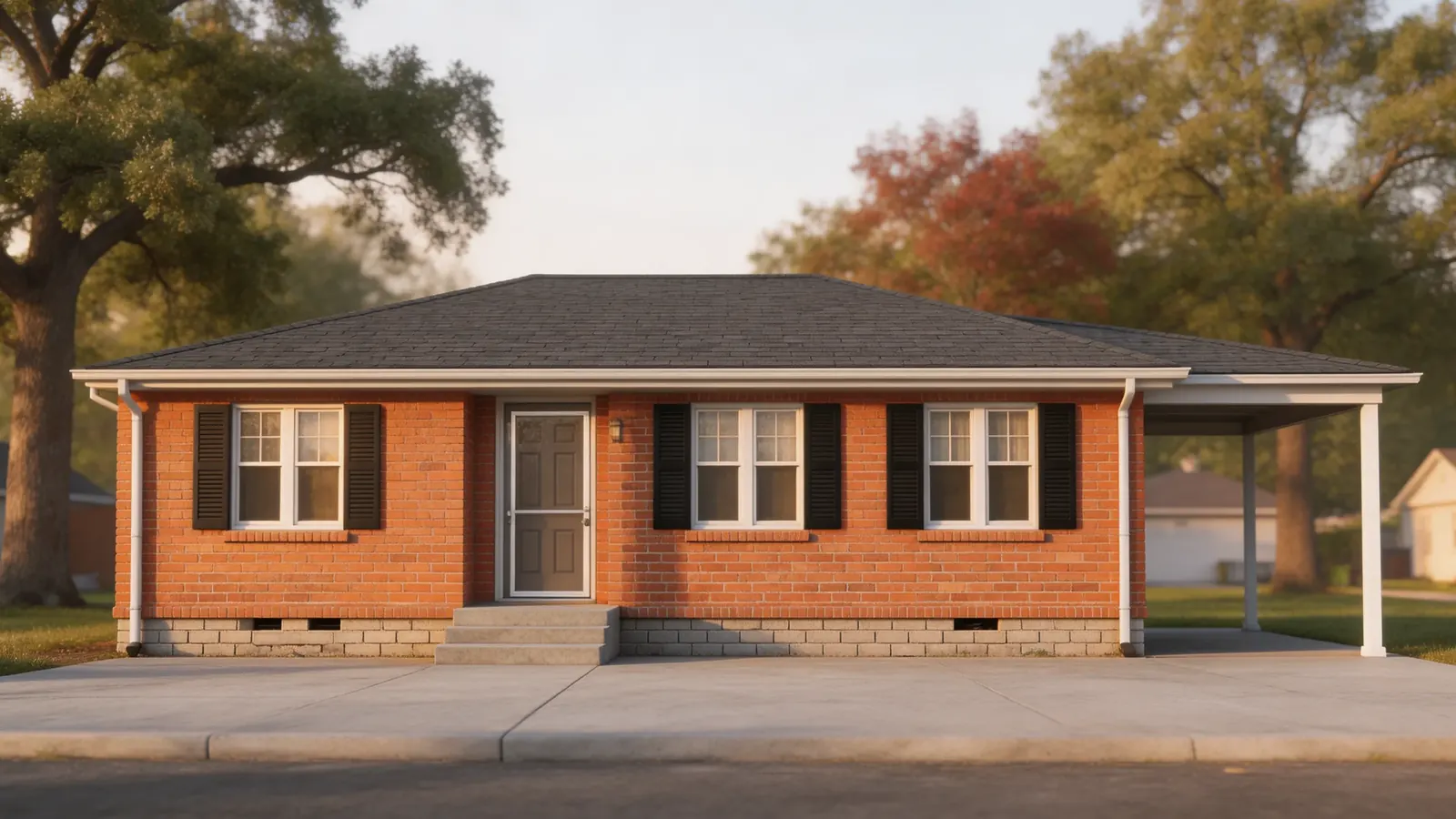
Brick veneer shows movement clearly, as stair-step cracks and gaps at window trim. That makes problems easy to spot early.
Split-levels and early subdivisions
A mix of crawl spaces, partial basements and slabs. Block walls in lower levels can bow when the clay behind them stays wet.
Slab-on-grade subdivisions
Most of the city's homes. Trouble tends to show up in the first 10 to 15 years, often from fill, grading or downspouts. Check any builder warranty first.
How a referral works
- 01 / 04
Tell us what you see
Call or use the short form. We ask your ZIP code, what you have noticed and whether you own the home.
- 02 / 04
We pick one contractor
We pass your request to one independent, licensed foundation contractor who covers your town. We do not sell it to a list.
- 03 / 04
They come out and look
The contractor calls to set up a free inspection, finds the cause and gives you a written estimate.
- 04 / 04
You decide
You do not owe anyone anything. Get other quotes if you want, and check the license at verify.tn.gov before you sign.
Towns we cover within about 25 miles
Each town page has its own soil, housing and permit notes. See all service areas.
- Barfield6.1 mi · Rutherford
- Blackman7.2 mi · Rutherford
- Walter Hill8.4 mi · Rutherford
- Kittrell9.5 mi · Rutherford
- Lascassas10 mi · Rutherford
- Christiana10.8 mi · Rutherford
- Rockvale10.9 mi · Rutherford
- Smyrna12.2 mi · Rutherford
- Almaville13.4 mi · Rutherford
- Fosterville14.7 mi · Rutherford
- Readyville15.1 mi · Cannon and Rutherford counties
- Milton16 mi · Rutherford
- Triune18.5 mi · Williamson
- Eagleville18.6 mi · Rutherford
- La Vergne19.2 mi · Rutherford
- Woodbury19.7 mi · Cannon
- College Grove22.3 mi · Williamson
- Bell Buckle23.5 mi · Bedford
- Shelbyville26 mi · Bedford
§ FAQ
Foundation repair questions
Is this service really free?
Yes, for homeowners. We do not charge you anything at any step. Contractors we refer may pay us a fee for the introduction, and that fee is not added to your estimate as a separate line. Our how it works page explains exactly how we get paid and what we do not do.
Are you a foundation repair company?
No. We are a referral service. We pass your request to one independent, licensed contractor who covers your area. That contractor does the inspection, gives the estimate and does any work you agree to. Their contract and warranty are between you and them, and you never have to hire the first contractor we send.
Do contractors here need a license?
Yes. In Rutherford County, residential repair jobs from $3,000 to $24,999 require a Tennessee home improvement license and a $10,000 surety bond. Jobs of $25,000 or more need a full state contractor license anywhere in Tennessee. Ask for the license number before anyone starts work, and check it at verify.tn.gov in a couple of minutes.
How do I know if a crack is serious?
Width and change matter most. Hairline cracks that stay the same are usually shrinkage. Cracks wider than about a quarter inch, cracks that are wider at one end, horizontal cracks in a basement wall, or cracks that keep growing are worth a professional look. Mark the ends in pencil with the date and check again in a few months.
What does foundation repair cost?
Angi's 2026 national average is about $5,175, and most homeowners pay $2,225 to $8,133. Pier jobs often run higher, because steel or hydraulic piers cost $1,000 to $3,000 each and many jobs need several. We have not found a published Murfreesboro-only average, so we do not quote one. See our cost guide.
Free inspection request
Get a licensed contractor out to look
Fill this in and we will pass it to one independent, licensed contractor who covers your town. They will call to set up a free visit. You do not have to hire them.
Tennessee requires a home improvement license for residential jobs from $3,000 to $24,999 in Rutherford County, and a contractor license for jobs of $25,000 or more anywhere in the state. Ask any contractor for their license number and check it at verify.tn.gov.
About this guide
Written by the Murfreesboro Foundation Repairs editorial team. The facts on this site come from the sources linked next to them: the U.S. Geological Survey, USDA soil surveys, Census Bureau estimates, Angi's 2026 cost guides and the Tennessee contractor licensing board. Have a licensed contractor or engineer inspect your home before you decide on a repair.
Last updated